missing translation for 'onlineSavingsMsg'
Läs mer
Läs mer
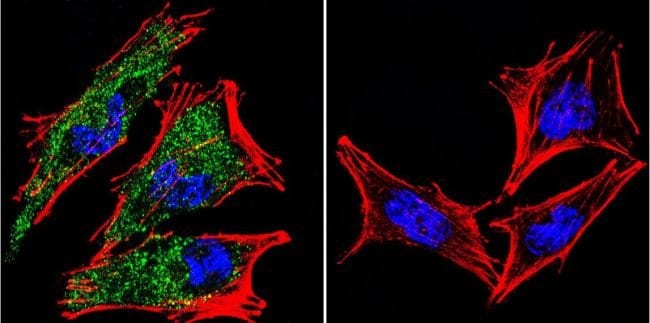
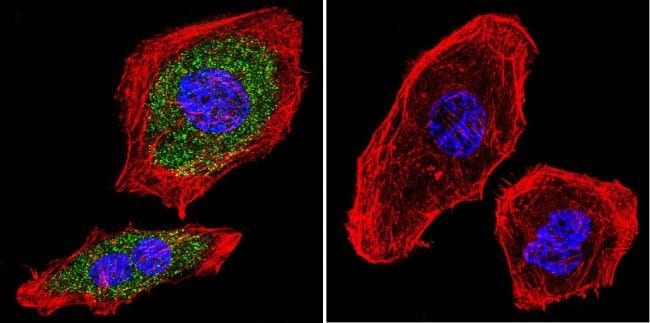
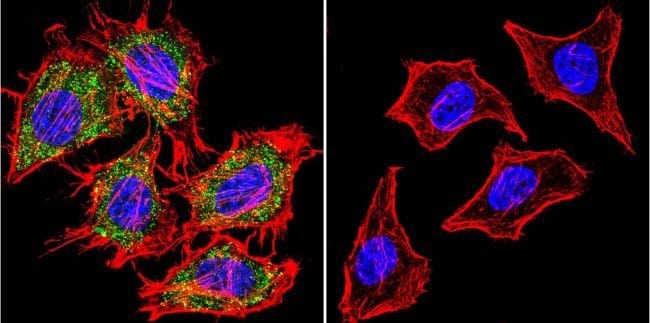

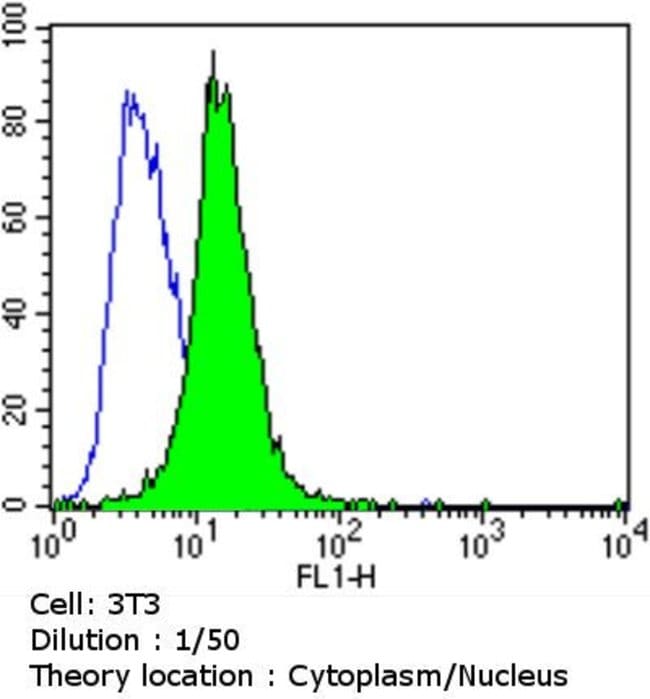
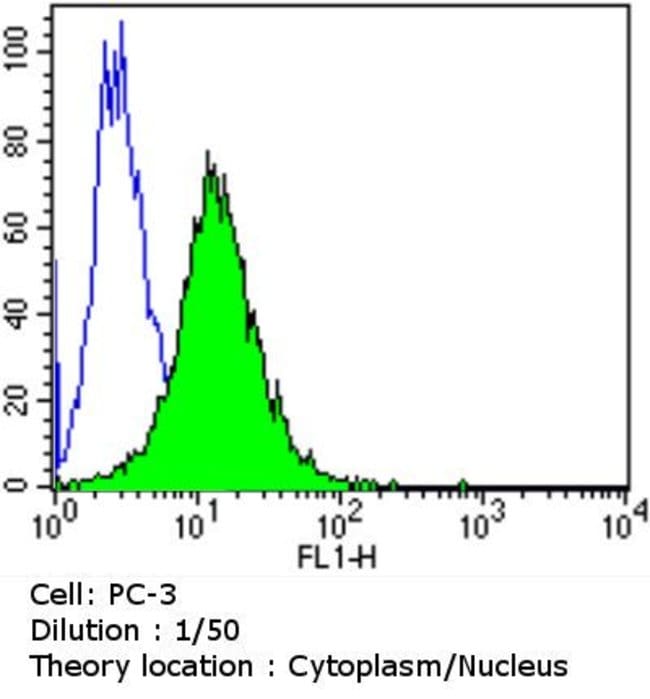
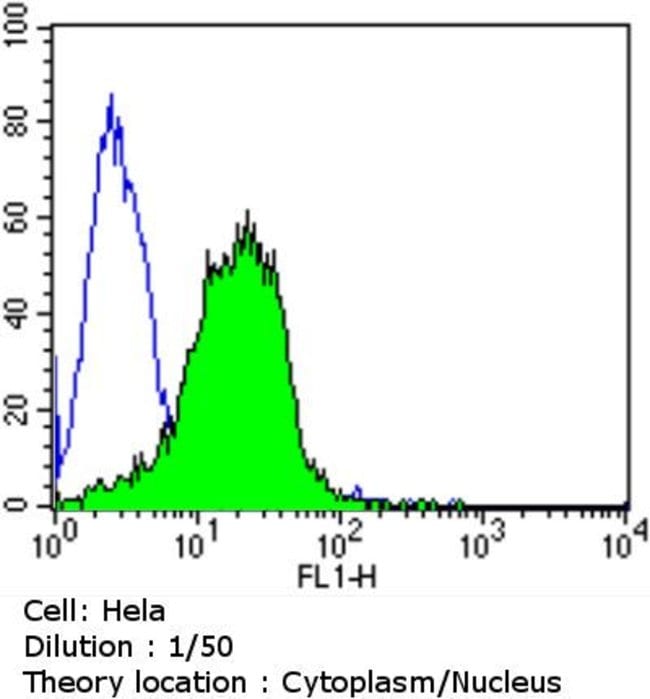
Invitrogen™ AHR Monoclonal Antibody (RPT9)

Mouse Monoclonal Antibody
Brand: Invitrogen™ MA1513
Denna artikel kan inte returneras.
Se returpolicy
Beskrivning
MA1-513 detects the aryl hydrocarbon receptor (AhR) from human, mouse, and rat cells. MA1-513 has been successfully used in immunoprecipitation, chromatin immunoprecipitation, immunocytochemistry, immunohistochemistry, immunofluorescence, and gel shift procedures. This antibody specifically immunoprecipitates a single ~95 kDa protein representing AhR from Hepa 1 cytosol. Although MA1-513 can be used in Western blotting procedures, MA1-514 (clone RPT1) is recommended for this procedure. The MA1-513 immunogen is a synthetic peptide corresponding to residues R(12) K R R K P(17) V(22) K P I P A E G I K(31) of mouse AhR.
AHR (Ah Receptor) belongs to a family of proteins comprised of its dimerization partner ARNT (HIF-1 Beta) and the Drosophila proteins PER and SIM. AHR contains an N-terminal sequence of approximately 200 amino acids termed the PAS domain. AHR, found in a variety of tissues, binds to a specific DNA enhancer sequence and initiates transcription of the mRNA for the cytochrome P-450 (CYPIA1) gene. The gene for AHR encodes a ligand-activated transcription factor involved in the regulation of biological responses to planar aromatic hydrocarbons. AHR has been shown to regulate xenobiotic-metabolizing enzymes such as cytochrome P450, and its ligands included a variety of aromatic hydrocarbons. AHR is a ligand-activated helix/loop/helix transcription factor found in a variety of vertebrate species. The known ligands for AHR are foreign planar aromatic compounds, such as polycyclic aromatic compounds and halogenated aromatic compounds such as 2,3,7,8-tetrachlorodibenzo-p-dioxin (TCDD). Unlike the steroid/thyroid hormone receptors, there is no known physiological ligand for AHR. Studies indicate that in non-ligand activated cells, AHR is found complexed with HSP90 predominantly in the cytoplasm. Upon binding to an agonist, the ligand-activated AhR is believed to transform to a nuclear, DNA binding form, and this transformation process appears to involve dissociation of HSP90 from AhR followed by formation of a heterodimer with AhR nuclear translocator protein (Arnt). Diseases associated with AHR include eosinophilic fasciitis and seborrheic dermatitis.
Specifikationer
| AHR | |
| Monoclonal | |
| 1 mg/mL | |
| PBS with 0.05% sodium azide | |
| P30561, P35869, P41738 | |
| AHR | |
| Synthetic peptide corresponding to residues R(12) K R R K P(17) V(22) K P I P A E G I K(31) of mouse AhR. | |
| 100 μL | |
| Primary | |
| Human, Mouse, Rat | |
| Antibody | |
| IgG3 κ |
| ChIP Assay, Flow Cytometry, Gel Shift, Immunohistochemistry (Frozen), Immunoprecipitation, Western Blot, Immunocytochemistry | |
| RPT9 | |
| Unconjugated | |
| AHR | |
| Ah; Ah receptor; Ahh; Ahr; Ahre; AH-receptor; aromatic hydrocarbon receptor; aryl hydrocarbon receptor; aryl-hydrocarbon receptor; bHLHe76; Class E basic helix-loop-helix protein 76; dioxin receptor; In | |
| Mouse | |
| Protein A | |
| RUO | |
| 11622, 196, 25690 | |
| -20°C, Avoid Freeze/Thaw Cycles | |
| Liquid |
Korrigering av produktinnehåll
Din input är viktig för oss. Fyll i det här formuläret för att ge feedback relaterad till innehållet på denna produkt.
Produkttitel
Hittar du en möjlighet till förbättring?Dela en innehållskorrigering