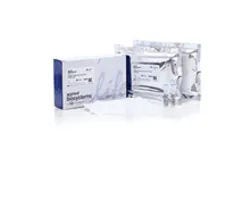
Nucleic Acid Reaction Assay Microplates
Plates for PCR, qPCR, DNA or RNA reactions designed to fit numerous thermal cycler models and instruments that sustain enzymatic and biochemical reactions. Choose from plates with or without barcodes, flat, U- or V-shaped bottoms, and varying sterility and volume parameters depending on your needs.



Useful Links
Save Now - Exclusive Deals

Product Code 10659845


Product Code 7194011

Product Code 12640965

Product Code 10794404

Product Code 10542645

Product Code 4882091

Product Code 10273513
Must Have

Product Code 4918095

Product Code 10058822


Product Code 11550274

Product Code 4882092

Product Code 16604152

Product Code 10032013

Product Code 12680985
Complete Your Order - Great Deals

Product Code 7180381

Product Code 4525186

Product Code 10130853
FAQ
Nucleic Acid Reaction Assay Microplates are used in molecular biology and biochemistry for various applications involving nucleic acids (DNA and RNA). Here are some common uses:
- Polymerase Chain Reaction (PCR): These microplates are often used to perform PCR, which is a technique to amplify specific DNA sequences
- Quantitative PCR (qPCR): They can be used for qPCR, which is a method to quantify the amount of DNA or RNA in a sample
- DNA Sequencing: Microplates are used in sequencing reactions to determine the nucleotide sequence of DNA
- RNA Analysis: They are used for various RNA-based assays, including reverse transcription PCR (RT-PCR), which converts RNA to DNA for amplification and analysis
- Genotyping: Microplates are utilized in genotyping assays to analyze genetic variations
- DNA/RNA Extraction and Purification: Used for extracting and purifying nucleic acids
- Hybridization Assays: Involves the binding of complementary nucleic acid strands and are used in techniques like microarray analysis
- Enzyme Assays: Studying enzymes interacting with nucleic acids
- Library Preparation: For next-generation sequencing
- Drug Discovery: High-throughput screening for nucleic acid interactions
Methods of nucleic acid analysis include:
- Polymerase Chain Reaction (PCR): Amplifies specific DNA sequences
- Quantitative PCR (qPCR): Quantifies DNA or RNA levels in real-time
- Reverse Transcription PCR (RT-PCR): Converts RNA to DNA for amplification
- DNA Sequencing: Determines DNA sequences (e.g., Sanger, NGS)
- Gel Electrophoresis: Separates nucleic acids by size
- Northern Blotting: Detects specific RNA sequences by hybridization to a labeled probe
- Southern Blotting: Detects specific DNA sequences by hybridization to a labeled probe
- Microarrays: Analyze gene expression or genetic variations by hybridizing nucleic acids to a large number of probes on a solid surface
- In Situ Hybridization (ISH): Localizes nucleic acids in tissues/cells
- Nucleic Acid Extraction: Isolates nucleic acids from samples
- Digital PCR (dPCR): Quantifies DNA/RNA with high precision
- Fluorescence In Situ Hybridization (FISH): Detects nucleic acids using fluorescent probes in cells
When selecting Nucleic Acid Reaction Assay Microplates, consider the following factors:
- Choose microplates made of materials compatible with your assay, such as polypropylene or polystyrene, which offer low binding properties and chemical resistance.
- Select the appropriate well format (e.g., 96-well, 384-well, or 1536-well) based on the throughput and volume requirements of your experiments.
- Consider plates with specific surface treatments (e.g., non-binding, high-binding) to enhance assay performance, depending on whether you need to minimize or maximize nucleic acid binding.
- For assays involving optical detection (e.g., fluorescence or absorbance), ensure the microplates have high optical clarity and are compatible with your detection instruments.
- Ensure the microplates can be effectively sealed to prevent evaporation and contamination, especially for sensitive assays like qPCR. Options include adhesive seals, heat seals, or cap mats.
Resources and Related Information


Shop By Brand